
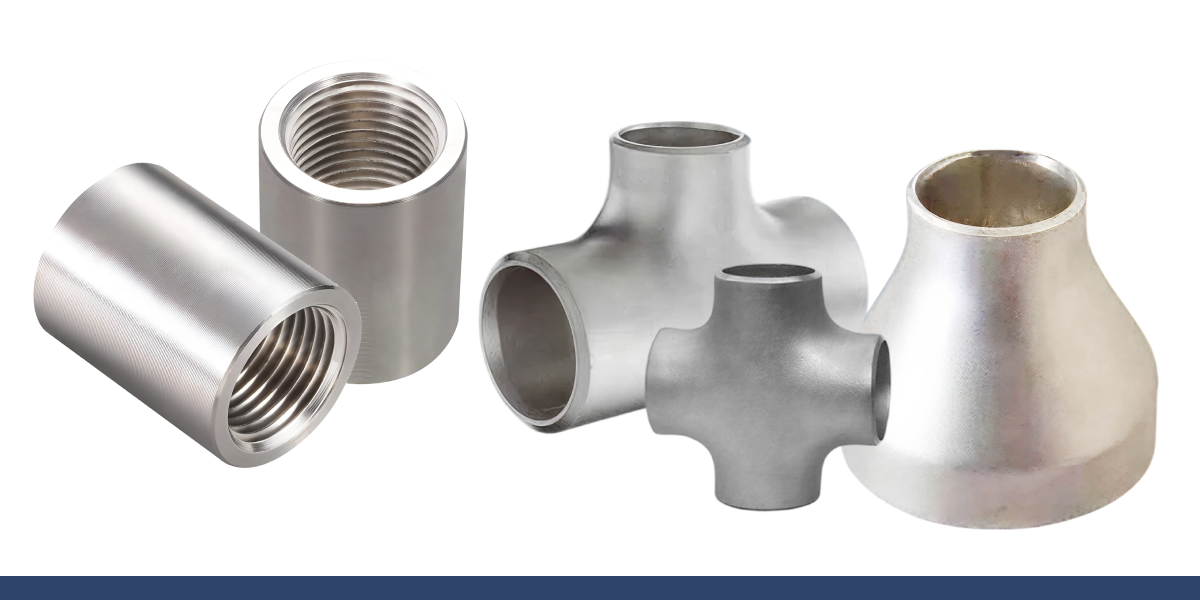
Stainless steel pipe fittings are essential components used to connect, control, or change the direction of pipelines in various industries. They help ensure smooth flow, leak-free connections, and long-term reliability in piping systems. Because stainless steel resists corrosion, pressure, and temperature changes, these fittings are widely used in critical and demanding environments.
This blog explains the types of pipe fittings, how different SS pipe fittings are made, and where they are commonly used across industries.
What Are Stainless Steel Pipe Fittings?
Stainless steel pipe fittings are mechanical components used to join pipes, change flow direction, reduce or expand pipe size, or close pipelines. They are designed to handle fluids, gases, steam, and chemicals safely.
Compared to other materials, stainless steel pipe fittings offer:
- Excellent corrosion resistance
- High strength and durability
- Long service life
- Low maintenance
This makes them suitable for both industrial and commercial piping systems.
Why SS Pipe Fittings Are Widely Used
SS pipe fittings are preferred because they:
- Perform well in high-pressure systems
- Handle extreme temperatures
- Resist rust and chemical reactions
- Maintain hygiene in the food and pharma industries
These advantages make them reliable for long-term pipeline operations.
Types of Pipe Fittings Used in Stainless Steel Systems
Pipe fittings come in different shapes and designs based on their function. Below are the most common types of pipe fittings:
Fitting Type | Function |
Elbow | Changes flow direction |
Tee | Splits or combines the flow |
Reducer | Changes pipe diameter |
Coupling | Connects two pipes |
Cap | Closes the pipe end |
Union | Allows easy disconnection |
Each fitting plays a specific role in maintaining safe and efficient flow.
Butt Weld Fittings
Butt weld fittings are welded directly to pipes, creating a strong and permanent joint. These fittings are widely used in high-pressure and high-temperature systems.
Common Applications:
- Oil and gas pipelines
- Power plants
- Chemical processing units
- Refineries
Key Benefits:
- Smooth flow with minimal leakage
- High strength and durability
- Suitable for large-diameter pipelines
Forged Fittings
Forged fittings are manufactured by shaping solid stainless steel under high pressure. This process improves strength and internal structure.
Common Applications:
- High-pressure piping systems
- Hydraulic and steam lines
- Industrial process pipelines
Key Benefits:
- Excellent mechanical strength
- Reliable under pressure
- Long service life
Bar Stock Threaded Pipe Fittings
Bar stock threaded pipe fittings are machined from solid stainless steel bars. They feature threaded ends for easy installation and removal.
Common Applications:
- Low to medium pressure systems
- Instrumentation lines
- Maintenance-friendly piping setups
Why They Are Used:
- Precise dimensions
- Easy installation
- Suitable for compact systems
Investment Casting Fittings
Investment casting fittings are made using a precision casting process that allows complex shapes and smooth finishes.
Common Applications:
- Food and beverage processing
- Pharmaceutical pipelines
- Decorative and visible piping systems
Key Benefits:
- High-dimensional accuracy
- Smooth surface finish
- Reduced machining requirement
Comparison Table: Types of SS Pipe Fittings by Manufacturing Method
|
Manufacturing Type |
Strength Level |
Typical Use |
|
Butt Weld Fittings |
Very High |
High-pressure pipelines |
|
Forged Fittings |
High |
Industrial process lines |
|
Bar Stock Threaded Fittings |
Medium |
Instrumentation systems |
|
Investment Casting Fittings |
Medium |
Hygienic and precision systems |
Industry Applications of Stainless Steel Pipe Fittings
1. Oil and Gas Industry
Used in pipelines, refineries, and offshore platforms to handle pressure and corrosive fluids.
2. Chemical and Petrochemical Industry
Ideal for handling aggressive chemicals safely without contamination or corrosion.
3. Power Generation Plants
Used in steam lines, cooling systems, and high-temperature applications.
4. Food and Beverage Industry
Preferred for hygienic piping systems due to easy cleaning and rust resistance.
5. Pharmaceutical Industry
Used in clean and sterile environments where material purity is critical.
6. Water Treatment and Desalination
Used in pipelines handling treated and saline water.
Common Stainless Steel Grades Used in Pipe Fittings
Grade | Key Features | Typical Use |
SS 304 | Good corrosion resistance | General industrial use |
SS 316 | Superior corrosion resistance | Chemical and marine |
SS 310 | High temperature resistance | Heat systems |
SS 321 | Heat and oxidation resistance | Power plants |
Choosing the correct grade ensures safety and long-term performance.
How to Choose the Right Stainless Steel Pipe Fittings
When selecting pipe fittings, consider:
- Type of fluid or gas
- Pressure and temperature conditions
- Installation method (welded or threaded)
- Industry standards and safety requirements
The right choice improves efficiency and reduces maintenance issues.
Understanding stainless steel pipe fittings, their manufacturing types, and industry applications helps in selecting the right solution for safe and efficient piping systems. Whether it’s butt weld fittings for high-pressure pipelines, forged fittings for industrial processes, or investment casting fittings for hygienic systems, each type serves a specific purpose.
Choosing the correct SS pipe fittings improves reliability, safety, and long-term performance across industries.
FAQs
Stainless steel pipe fittings are used to connect, control, or change the direction of pipelines in industries like oil & gas, chemical, power, food, and pharmaceuticals.
Butt weld fittings are welded for permanent, high-strength joints, while threaded fittings allow easy installation and removal in low to medium-pressure systems.
Forged fittings have a stronger internal structure, making them ideal for handling high pressure and demanding operating conditions.
Investment casting fittings are commonly used in the food and pharmaceutical industries due to their smooth finish and precise design.